
Walk Through Stories Written in Stone and Glass

Set out on architectural tours of Britain’s iconic public libraries, discovering regal reading rooms, bold contemporary silhouettes, and the welcoming civic spaces that anchor neighborhoods. From St Pancras’s terracotta halls to Peckham’s playful cantilever, we map routes, share insider tips, and celebrate people who bring these buildings alive. Share your favorites, ask route questions, and subscribe to join future walks and live sketch-alongs across cities and towns.

Origins and Evolution of Civic Knowledge Palaces

Masterpieces You Can Step Into

Walk inside defining works where craft meets community, and every staircase, balustrade, and window frames a moment of discovery. These buildings invite you to read the architecture as carefully as any book, revealing intentions through materials, light, and circulation while welcoming researchers, toddlers, tourists, and night‑owl learners with equal grace.

The British Library at St Pancras

Sir Colin St John Wilson’s terracotta terraces, arcades, and generous piazza create a distinctly British modern classic, completed in the 1990s beside St Pancras. Step inside to see the soaring King’s Library Tower, calm timber finishes, and Paolozzi’s monumental Newton sculpture outside, before exploring reading rooms engineered for quiet focus and effortless wayfinding.

Library of Birmingham

Mecanoo’s gold‑and‑black lattice wraps stacked drums around terraces with citywide views, reconnecting audiences to skyline and street. Ride the escalators through a spectacular atrium, pause in the Shakespeare Memorial Room lovingly reinstated at the top, then watch afternoon light sift across study tables, exhibition galleries, and buzzing makerspaces designed for experimentation.
Liverpool Central Library

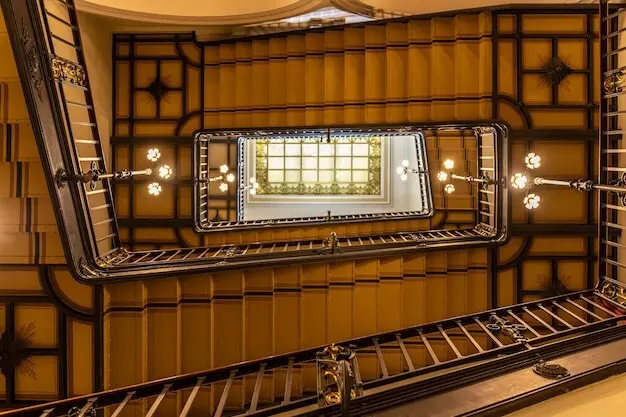
Step from historic stone into a light‑filled new heart where a grand atrium spirals upward to a roof terrace. Austin‑Smith:Lord’s restoration lovingly preserves the Picton Reading Room and Hornby Library, while contemporary interventions clarify circulation, reveal collections, and welcome school groups, researchers, and curious wanderers without sacrificing warmth, memory, or civic drama.


Neighborhood Landmarks with Daring Shapes

Some of Britain’s most memorable civic rooms sit boldly on corners and plazas, using surprising silhouettes to announce welcome. By experimenting with cantilevers, inverted pyramids, and delicately ventilated halls, these libraries create playful, legible buildings that double as community living rooms, staging festivals, markets, homework clubs, and spontaneous conversations under generous canopies.

Peckham Library’s Joyful Cantilever

Alsop & Störmer lifted the reading room above a sheltered public plaza, wrapping the structure in shimmering green panels and skinny pilotis. The elevation grants quiet while the underside becomes stage and shade, encouraging markets, dance workshops, and chats that continue naturally upstairs among books, views, and sunlit desks overlooking Rye Lane.

Canada Water Library’s Inverted Pyramid

Piers Gough’s sculptural form stacks a compact footprint over widened upper levels, freeing waterfront public space while creating dramatic interior volumes. Inside, warm timber linings, intimate niches, and carefully balanced acoustics turn exuberant geometry into calm study environments, proving expressive architecture can still prioritize concentration, inclusion, and everyday comfort for varied users.

Brighton’s Jubilee Library

Bennetts Associates delivered a daylight‑rich civic anchor for the regenerated square, combining passive ventilation, generous glazing, and welcoming thresholds. On weekends, buskers animate the forecourt; inside, families settle under soft north light while students diagram elevations, noticing how brick, steel, and timber resolve quietly into a humane, sustainable place of learning.

How to Plan an Unforgettable Architectural Library Tour

A little preparation amplifies joy: check opening hours, card requirements, and photography rules; note quiet zones and visitor routes; and map train connections between cities. Pack a small sketchbook, soft pencils, and headphones, then pace yourself with café stops so you can absorb details instead of rushing between appointments.

A Day in London: From St Pancras to Peckham

Begin early at the British Library, exploring exhibitions before settling in the courtyard for sketches of arcades and brickwork. After lunch around King’s Cross, ride the Overground to Peckham Rye, photograph the library’s lifted profile, then climb for sunset views, evening workshops, and relaxed notes that capture changing street life below.

Northern Circuit: Liverpool, Manchester, and Beyond

Take an early train to Liverpool Central for the atrium ascent and rooftop panorama, then hop to Manchester Central Library’s rotunda to study symmetry, reading rings, and restorations. If time allows, add a stop in Oldham or Leeds to compare materials, civic forecourts, and the rhythms of weekday users.

Etiquette, Access, and Photography

Remember these are working spaces first. Keep conversations low, silence alerts, and avoid photographing people without permission. Ask staff about tripod policies, accessibility routes, and best times to tour children’s areas. Thank librarians, donate if you can, and share respectful notes so others feel welcomed too.

Light, Shadow, and the Art of Quietness

Notice clerestories and north‑facing windows that diffuse glare, the way atria step light downward, and how shades modulate changeable skies. Sketch shadows as volumes, not lines, and you will see how architects tune silence, concentration, and welcome through calibrated brightness and carefully protected pools of intimacy.

Materials that Invite Touch

Run your fingers over cool stone, warm oak, bronzed handrails, and honest concrete, noticing how textures cue behavior and memory. Contrast Victorian tiles with contemporary composites, then record how patina gathers at corners and thresholds, evidence of thousands of daily rituals shaping a building’s character without ceremony.

Wayfinding, Acoustics, and Universal Design

Look for tactile maps, clear sightlines, and consistent signage families that soothe first‑time visitors. Listen for acoustic baffles softening chatter without deadening life. Check ramps, lifts, and adjustable desks, then note how inclusive choices make spaces feel generous to everyone, not only those who depend upon adaptations.

People, Stories, and Civic Impact

What makes these buildings unforgettable is the life within them: librarians coaxing shy questions into confident research, grandparents discovering digital tools, refugees practicing conversation, and students claiming quiet corners. Architecture sets the stage, but daily rituals, kindness, and access turn rooms into engines of opportunity and belonging.
Pentozunotarinarikavizori
Privacy Overview

This website uses cookies so that we can provide you with the best user experience possible. Cookie information is stored in your browser and performs functions such as recognising you when you return to our website and helping our team to understand which sections of the website you find most interesting and useful.